
Africa Business Opportunities: A Continent of Fifty-Four Markets
Talk to us about this service
Trade, import, logistics, sourcing — whatever you're planning, the fastest way to a quote is a WhatsApp message. Our team replies during Lagos business hours.
WhatsApp usYour message tells us which page you came from
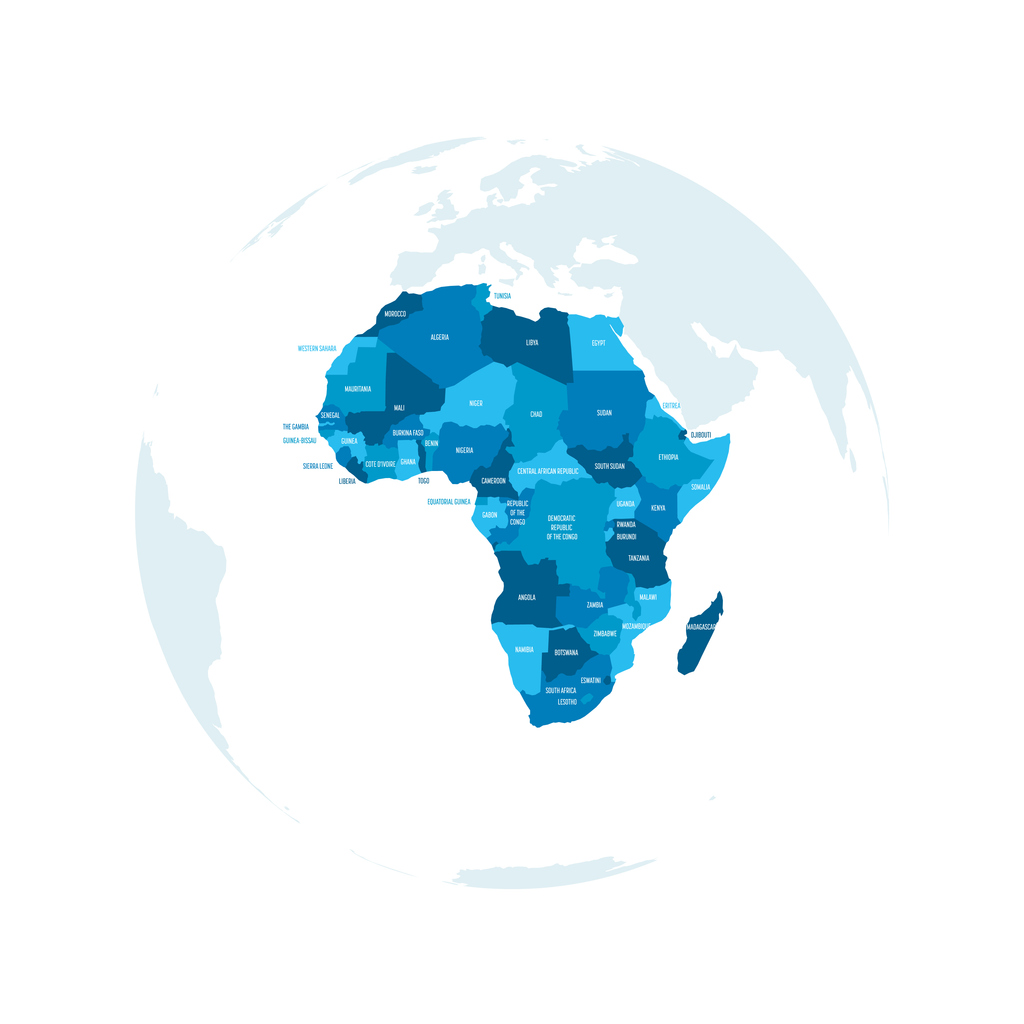
“Africa” is a useful word for a conference title and a poor one for a business plan. The continent contains fifty-four sovereign markets with different currencies, tariffs, languages, legal systems, consumer incomes and levels of difficulty, and a strategy that treats them as one will be wrong in most of them simultaneously. The useful work is choosing which two or three to enter, and in what order.
Start by sorting the markets
A workable first cut uses three variables, not fifty:
- Size of the addressable market for your specific product — not population, which is a poor proxy where income is concentrated.
- Ease of getting paid and getting money out — currency convertibility, banking depth, and whether hard currency can be obtained and remitted.
- Cost of being present — registration, licensing, local content requirements, and whether you need a physical operation or can serve the market through a partner.
Score honestly and the list shortens quickly. Large markets are usually harder; easy markets are usually small. The frequent right answer is one large difficult market entered carefully, plus one smaller easy market entered quickly to generate early revenue and learning.
The clusters worth distinguishing
| Cluster | Principal markets | What characterises it |
|---|---|---|
| West Africa — anglophone | Nigeria, Ghana | Large consumer demand, import-dependent, currency volatility, dense trading culture |
| West Africa — francophone | Côte d’Ivoire, Senegal and the WAEMU states | A shared currency pegged to the euro, harmonised business law, far easier FX, smaller individual markets |
| East Africa | Kenya, Tanzania, Uganda, Rwanda, Ethiopia | A functioning common market in parts, strong services and payments adoption, two port corridors serving a large hinterland |
| Southern Africa | South Africa and its neighbours | The deepest capital markets and best infrastructure on the continent; mature, competed, and often the regional headquarters |
| North Africa | Egypt, Morocco, Tunisia, Algeria | Manufacturing-oriented, Europe-facing, with their own regulatory and currency dynamics |
| Central Africa | Cameroon, Gabon, DRC and neighbours | Resource-driven, logistically hard, high risk and correspondingly high margin where it works |
The single most under-appreciated distinction on that list is the currency one. The CFA franc zones offer convertibility that anglophone West Africa does not, and for a business whose main worry is getting paid in hard currency that can outweigh a larger consumer market next door.
What AfCFTA changes, and what it does not
The African Continental Free Trade Area is designed to remove tariffs on qualifying goods traded between member states and to liberalise services. It is a genuine long-term shift and it is being implemented gradually, product by product and country by country.
What it does not do is remove the actual obstacles to intra-African trade, which are mostly not tariffs:
- Border dwell time and documentation
- Road, rail and port capacity
- Rules-of-origin certification, which is the condition of claiming the preference and is an administrative burden in itself
- Payment between currencies that do not trade directly against each other
- Standards and product registration, which remain national
Plan on the basis that AfCFTA improves the arithmetic at the margin and that the operational difficulty is unchanged. Businesses that build for the operational difficulty will capture the tariff benefit; businesses that build for the tariff benefit will discover the difficulty.
Six demand patterns that recur almost everywhere
- Import substitution in bulky goods. Anything heavy, voluminous or perishable is expensive to import, so local production has a structural edge. Packaging, building materials, beverages and basic plastics recur across every market.
- Power that works. Unreliable grids create continuous demand for generation, solar, storage and the equipment around them — sold to businesses, not to utilities, with commercial payment terms.
- The missing middle of the supply chain. Storage, cold chain, aggregation and distribution are thin almost everywhere, and the gap is widest outside the capital cities.
- Payments and the businesses built on them. Mobile money adoption is deep in East Africa and growing elsewhere, and it supports lending, insurance and commerce that could not previously be reached.
- Value addition to raw exports. The continent still exports a great deal of unprocessed material and imports the processed version back. Governments are actively pushing against this, which creates both opportunity and obligation.
- Health, education and housing for a young and urbanising population, where public provision is stretched and private provision is paid for out of pocket.
Sequencing an entry
- Export to the market first. Sell through an importer or a distributor. Low capital, reversible, and it generates real demand data rather than survey data.
- Appoint a distributor on a short, volume-conditional term. Not long exclusivity — you know least at the start and your leverage is highest.
- Hold local stock. The step that most often changes the business: customers buy from inventory, in local currency, on local terms, without waiting for a shipment.
- Register locally when regulation, procurement eligibility or scale requires it.
- Manufacture or assemble only when volume and the duty arithmetic justify it, not because it was the plan.
Honest assessment
Returns in African markets are real and so is the dispersion around them. The businesses that do well are usually unglamorous, asset-owning and patient: distribution, storage, processing, equipment supply, power. The businesses that disappoint are usually the ones whose model assumed the hard parts — payment, logistics, quality consistency, foreign exchange — would behave as they do elsewhere.
The two most reliable predictors of failure are entering more than two markets at once, and committing capital before anything has been sold. The two most reliable predictors of success are a first order shipped early and a partner who was properly checked.
What Wigmore Trading does
We are a Nigerian-registered trading, sourcing, logistics and distribution company, and our purpose is to let a business be commercially present in West Africa without first building a company there.
- Market entry without a subsidiary — we import, clear, warehouse, invoice locally and distribute, so you have a presence and your customers have a local counterparty
- Sourcing and export in the other direction: commodities, raw materials and manufactured goods, with documentation and quality handled at origin
- Freight, clearing and warehousing across the region
- Partner search and due diligence where you want your own distributor rather than ours
- Market testing — a first consignment through our channels, which tells you in weeks what a study will not tell you in months
Our trade tools cover landed cost, duty, HS codes, freight and export economics, and will let you price an entry before you commit to one.
Next step: tell us the product and the markets you are weighing. We will tell you which one to enter first, what it costs to land there, and what we would do in your position. Contact the desk.
Related reading
- West Africa Business Opportunities: ECOWAS, Two Currencies, One Corridor — ECOWAS, the two currency zones and the coastal corridor
- East Africa Business Opportunities: The Common Market That Mostly Works — the EAC common market and the two port corridors
- Nigeria Business Opportunities: 230 Million People and a Hard Operating Environment — the sectors with real demand and the constraints that bite
Market conditions, tariffs, AfCFTA implementation and currency regimes change continuously and differ by country. This article is indicative as at 2026 and is not investment advice. Verify current conditions before committing capital.

Comments are closed.