
Nigeria Business Opportunities: 230 Million People and a Hard Operating Environment
Talk to us about this service
Trade, import, logistics, sourcing — whatever you're planning, the fastest way to a quote is a WhatsApp message. Our team replies during Lagos business hours.
WhatsApp usYour message tells us which page you came from
Nigeria is the largest consumer market in Africa and one of the harder places on the continent to operate. Both halves of that sentence are load-bearing, and plans that only carry the first half are the ones that fail. This is an attempt at the honest version: where the demand genuinely is, what will actually get in the way, and how to enter without committing capital you cannot recover.
What the market is
Over two hundred million people, heavily urbanised along a Lagos–Ibadan corridor and in Kano, Port Harcourt and Abuja, with a young median age and a consumption pattern dominated by food, transport, communications and energy. Income is concentrated rather than evenly distributed, so a count of the population is a poor proxy for the addressable market of any particular product. The practical measure is how many households can buy your specific item at your specific price, and that number is usually a fraction of the headline.
The market is also overwhelmingly import-dependent in manufactured goods, with a large informal trading sector that moves most consumer volume. That matters: a distribution plan built around formal modern trade will reach a small share of demand, because most of it passes through open markets and independent retail.
Where demand is real
- Power equipment. Grid supply is intermittent, so every business of any size generates its own. Generators, solar modules, inverters, batteries, switchgear and the maintenance around them sell continuously to customers who pay commercially.
- Construction and building materials. Housing demand is structural and continuous. Cement is domestic; finishes, fittings, electricals, sanitaryware and glazing are largely imported.
- Food processing and packaging. The country grows a great deal, processes less than it could, and imports almost all of its packaging. Packaging is poor value density and therefore one of the strongest local-production cases available.
- Agricultural commodities for export. Sesame, cocoa, cashew, ginger, hibiscus, gum arabic and shea. The value addition gap — cleaning, grading, shelling, crushing — is the opportunity rather than the farming.
- Industrial inputs and spares. Existing manufacturers need chemicals, resins, components and spares continuously, and supply is unreliable. A supplier who holds local stock wins on availability rather than price.
- Logistics and storage. Port congestion, thin warehousing and poor cold chain make this a persistent gap, especially outside Lagos.
- Health and pharmaceuticals. Large import bill, strong policy push toward local production, and demanding regulatory compliance.
What will get in the way
Foreign exchange. This is the first and largest operating constraint, and the issue is availability and timing as much as rate. A business with costs in dollars and revenue in naira carries a position whether or not it has called it one. Practical responses: price in a way that can move, hold as little naira working capital as the business allows, maximise local input content, and avoid structures that require remitting large sums on a fixed schedule.
Power. Budget for self-generation from the start. For anything energy-intensive, this single line decides viability and should be designed for rather than absorbed.
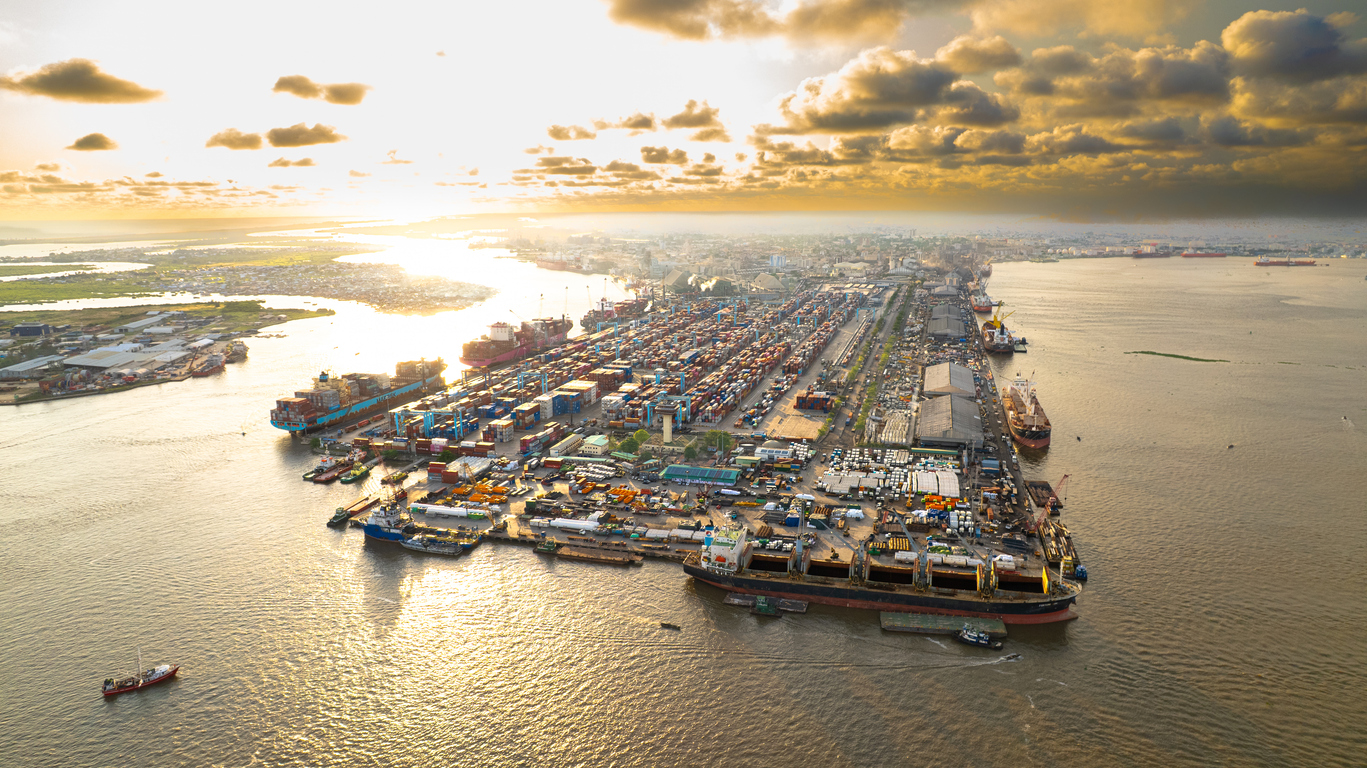
The port. Apapa and Tin Can congestion, document-driven delays and demurrage are a routine and large cost. The newer deep-sea capacity at Lekki changes vessel economics but inland evacuation remains the constraint. Clearing well is a genuine competitive advantage here, not an administrative detail.
Multiple layers of levy. Federal, state and local charges, plus sector regulators, each with their own registrations. A plan that budgets only for federal duty and VAT will be wrong.
Counterparty risk. Advance-fee fraud and impersonation are a persistent feature of inbound and outbound trade. Verify registration, directors and physical premises before shipping or paying. This is cheap and almost nobody does it until after the first loss.
Security, which varies sharply by region and should be assessed route by route rather than nationally.
Entering without a subsidiary
The instinct is to incorporate, hire and open an office. That is the most expensive and least reversible order to do things in. A better sequence:
- Ship a trial consignment to a local importer or distributor. You learn the real landed cost, the real duty treatment, the real clearing time and the real price point.
- Hold stock locally through a partner. This is usually the step that transforms the business: customers buy from inventory, in naira, without waiting on a shipment, and your competitor who ships to order loses the order.
- Appoint distribution on a short, volume-conditional term. Not long exclusivity granted at the point of least knowledge.
- Register when procurement eligibility, regulatory registration or scale requires it — and note that product registration with the relevant regulator is required for food, drugs, cosmetics and chemicals regardless of how you sell.
- Manufacture only when the duty arithmetic on inputs versus finished goods, and the volume, justify it.
Honest assessment
Nigeria rewards operators and punishes planners. The businesses that do well hold stock, clear their own goods, know their customers personally and price for volatility. The businesses that struggle are usually the ones that treated the market as an export destination to be served at arm’s length, or that committed fixed costs before generating revenue.
It is also fair to say that Nigeria is not the right first African market for every business. If your main concern is predictable hard-currency payment and your volumes are modest, the CFA franc markets of francophone West Africa are easier, and nothing is lost by entering there first. Nigeria is where the scale is; it is not where the comfort is.
What Wigmore Trading does
We exist precisely to be the local operating layer, so a foreign business can be commercially present here without building a company first.
- Import, clearing and local distribution — we buy or import, clear, warehouse, invoice in naira and sell into the trade, so your product is available locally and your customers deal with a Nigerian counterparty
- Warehousing in Lagos, including bonded storage for duty deferral — see our warehouse space guide and estimator
- Sourcing and export of Nigerian commodities and manufactured goods, with quality and documentation handled at origin
- Product and factory sourcing if local manufacture or private label is the right answer — see manufacturing and product sourcing
- Counterparty verification before you ship or pay anyone here
- Market testing — a first consignment through our channels tells you in weeks what a market study will not tell you in months
Start with the landed cost calculator and the trade tools to see what your product costs delivered, duty paid, before you decide anything.
Next step: tell us the product. We will give you a delivered cost, the registrations you would need, a realistic view of who buys it here, and what we would do first in your position. Contact the desk.
Related reading
- West Africa Business Opportunities: ECOWAS, Two Currencies, One Corridor — ECOWAS, the two currency zones and the coastal corridor
- Africa Manufacturing Opportunities: Products Still Being Imported — how to read import data and test a local build
- Africa Logistics Opportunities: Corridor by Corridor — corridor economics and where the days are lost
Tariffs, FX conditions, levies and regulatory requirements change frequently. This article is indicative as at 2026 and is not investment, tax or legal advice. Verify current conditions before committing capital.

Comments are closed.