
Best Baby Creams for Fair Skin in Nigeria & Prices (2026)
Talk to us about this service
Trade, import, logistics, sourcing — whatever you're planning, the fastest way to a quote is a WhatsApp message. Our team replies during Lagos business hours.
WhatsApp usYour message tells us which page you came from
Choosing a baby cream in Nigeria: what actually matters
Your baby’s skin tone doesn’t determine which moisturiser they need — their skin’s condition does. Here’s how to choose for dryness, eczema, heat rash and nappy rash in a hot climate, how to avoid counterfeits, and one thing you should never put on a baby.

The short answer
- Skin tone is irrelevant to the choice. What matters is whether your baby’s skin is dry, sensitive, eczema-prone, or dealing with heat or nappy rash.
- Simple beats elaborate. A plain, fragrance-free emollient does more for a baby than a long ingredient list.
- Baby skin is thinner than adult skin, with a larger surface area relative to body weight — so it absorbs proportionally more of whatever you put on it.
- In a hot climate, less is often more. Heavy creams in humid weather can trap sweat and worsen heat rash.
- Never use skin-lightening products on a child. Not diluted, not occasionally, not “just a little” — the risks are serious and specific to infants.
Most parents arrive at this question worried about something concrete: flaky skin, a rash that won’t settle, or a baby scratching at night. The honest answer is that the right product follows from the problem, not from how light or dark your baby’s skin is — that simply isn’t a clinical variable in choosing a moisturiser.
What baby skin genuinely needs:
A working barrier
The outer skin layer holds water in and irritants out. Regular emollient keeps it intact — that’s most of the job.
Few ingredients
Fragrance-free and dye-free reduces the chance of reaction. Long botanical lists mean more things to react to.
Climate-appropriate
Lighter lotions in humid heat, richer creams for genuinely dry skin or air-conditioned rooms.
What does your baby’s skin need?
Four questions about their skin’s actual condition — not its colour.
Baby skin needs finder
General guidance only, not a diagnosis. Nothing is stored or sent.
Baby moisturisers you’ll commonly find.
Described by what’s in them, not by claims about what they’ll do. All are mainstream baby lotions sold widely — none is a lightening product, and none should be chosen for skin tone.
Johnson’s Baby Lotion
The most widely stocked baby lotion in Nigeria and among the most affordable. A light lotion for everyday moisturising on skin without particular problems.
- Texture: light, absorbs quickly — suits humid weather
- Note: scented versions exist; choose fragrance-free if skin is sensitive
- Availability: supermarkets, pharmacies and open markets nationwide
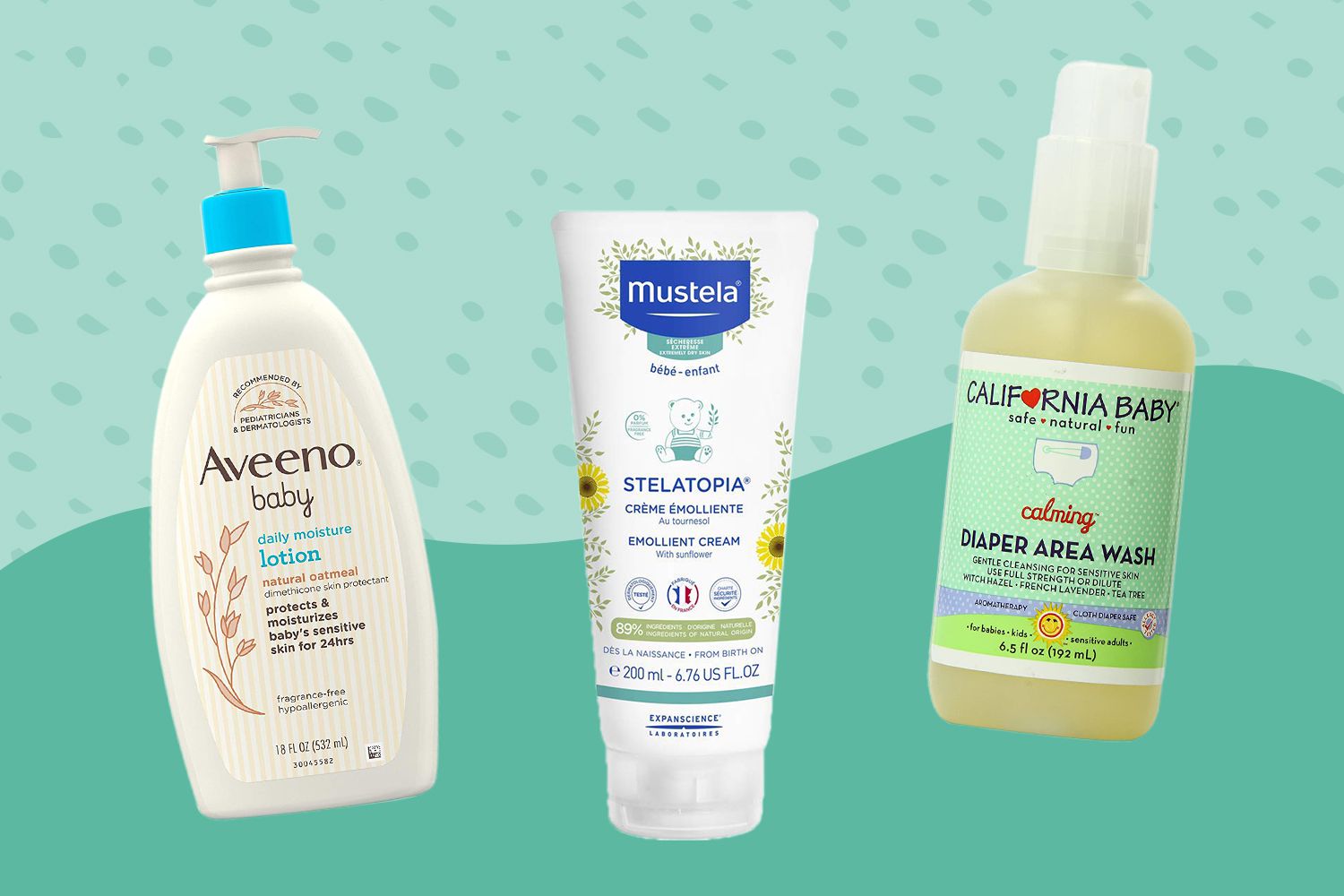
Aveeno Baby
Formulated around colloidal oatmeal, an ingredient with a long history of use for soothing itchy and irritated skin. Commonly recommended for eczema-prone babies.
- Texture: richer than a basic lotion
- Note: fragrance-free variants are the ones to look for
- Availability: pharmacies and larger stores; costlier than local staples
Sebamed Baby
Formulated to a pH of about 5.5, close to the skin’s natural acidity, which supports the protective barrier rather than stripping it.
- Texture: light to medium, non-greasy
- Note: the matching pH-balanced wash is often used alongside
- Availability: pharmacies and baby stores
Mothercare Baby Lotion
A straightforward own-brand emollient for daily use, generally fragrance-light and aimed at ordinary everyday moisturising.
- Texture: standard lotion consistency
- Note: check availability, as retail presence in Nigeria has changed over time
- Availability: baby stores and online
Little Angels Baby Lotion
A budget option widely sold in Nigerian supermarkets, suitable for routine moisturising on skin without specific problems.
- Texture: light everyday lotion
- Note: as with any budget line, check packaging and NAFDAC registration
- Availability: supermarkets and baby stores
Plain emollients — the underrated option
For genuinely dry or eczema-prone skin, simple unscented emollient ointments and creams from a pharmacy often outperform branded baby lotions, and usually cost less per use.
- Ask your pharmacist what emollients they stock for infants
- Fewer ingredients means fewer potential irritants
- For persistent eczema, see a doctor rather than working through products
Terms like “dermatologically tested”, “paediatrician approved”, “natural” and “hypoallergenic” are marketing descriptions, not regulated guarantees, and “paraben-free” does not mean “free from harmful chemicals”. Read the ingredient list, patch test on a small area first, and judge by how your baby’s skin actually responds.
Never use skin-lightening products on a baby.
Why this matters more for infants than adults
Some products are marketed with promises to lighten, brighten or “even out” a baby’s complexion. These should never be applied to a child. Infant skin is thinner than adult skin and a baby has far more skin surface relative to body weight, so anything absorbed reaches a much higher concentration in a small body.
- Potent steroids, sometimes present in unregulated lightening creams, can thin a child’s skin and suppress the adrenal glands.
- Mercury, found in some unregulated products, is absorbed through skin and is toxic to the kidneys and developing nervous system.
- Hydroquinone is not appropriate for infant use, and misuse can cause lasting pigmentation damage.
- Reduced natural protection — lightening skin removes some of its defence against sun damage.
A baby’s complexion will develop naturally over the first months and years. Darker skin is not a condition to be treated. If you have a genuine concern about your child’s skin — unusual patches, discoloration, or anything changing — that’s a conversation for a paediatrician or dermatologist, not a cosmetic purchase.
Spotting counterfeit baby products.
Counterfeit cosmetics and baby products circulate in Nigeria, and for infant skin the stakes are higher than for adults — a fake product may contain anything at all. A few checks make a real difference.
- Check for NAFDAC registration. Cosmetics and baby products sold in Nigeria should be registered with NAFDAC, and the number should appear on the packaging.
- Inspect the packaging. Blurred printing, spelling errors, mismatched fonts, poor seals and missing batch numbers or expiry dates are all warnings.
- Be suspicious of unusually low prices. A well-known brand priced far below everywhere else is a reason to ask why.
- Check smell and texture against a product you know. Anything that seems off — separated, gritty, strongly chemical — don’t use it on a baby.
- Buy from pharmacies and reputable retailers where you can, rather than unverified street sellers or unknown online listings.
If you sell baby products, a traceable supply chain protects your customers and your reputation. Wigmore Wholesale supplies personal care and household goods to shops, pharmacies and businesses across Nigeria — we’re an interested party in saying so, but the point about sourcing genuine, properly registered stock holds regardless of who you buy from.
Quick answers
What is the best baby cream for fair skin in Nigeria?
Can I use a cream to make my baby’s skin lighter?
Which baby lotion is best for dry skin?
How often should I moisturise my baby?
What causes heat rash in babies, and what helps?
How do I know a baby product is genuine?
Important: This page is general information for parents and is not medical advice. It is not a substitute for consultation with a paediatrician, doctor, midwife or pharmacist, and nothing here should delay seeking medical attention. Every baby’s skin differs; patch test any new product on a small area first and stop using it if the skin reacts. Seek medical advice promptly for persistent, spreading, weeping, blistering or painful rashes, for any rash accompanied by fever or an unwell baby, or for any skin change you are unsure about. Products named are described by commonly published formulation information and general availability in Nigeria; naming them is not an endorsement, and Wigmore Trading is not affiliated with any brand mentioned. Terms such as “hypoallergenic”, “dermatologically tested” and “natural” are marketing descriptions rather than regulated guarantees. Confirm that any cosmetic or baby product you buy or sell in Nigeria is registered with NAFDAC.
Stocking baby care? Source it genuine.
Personal care, baby products and household goods supplied to shops, pharmacies and businesses across Nigeria — traceable, invoiced and delivered.

LEAVE A COMMENT
You must be logged in to post a comment.